
Interior Paint Finishes Explained: Matte, Eggshell, Satin, and Beyond
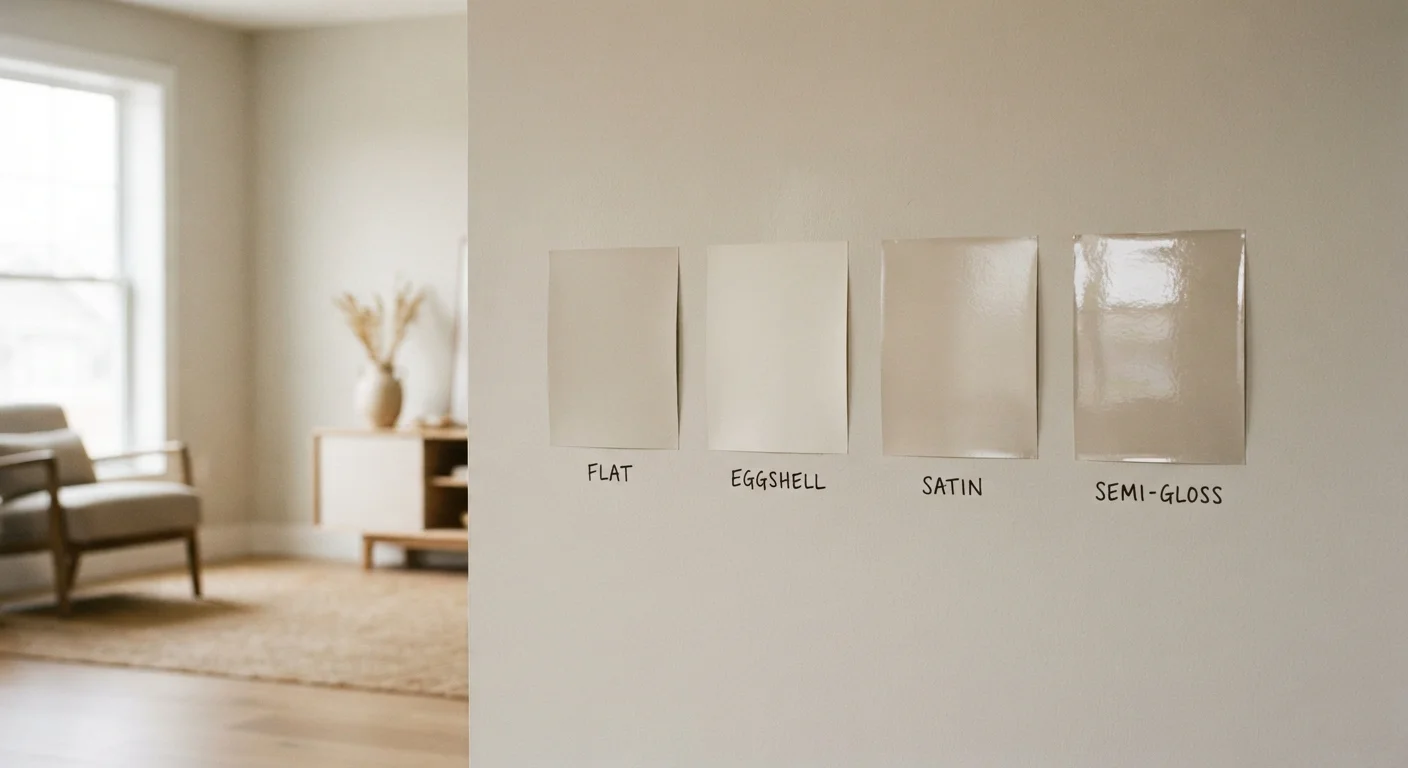
Photo credit: strategicimprovementplan.net
In this article
Choosing the wrong paint finish can mean scrubbable walls in the wrong room or glossy ceilings that show every flaw. Learn what each finish is built for.
What paint finish actually means
Paint finish refers to the amount of sheen in a dried coat of paint. Sheen comes from the ratio of binder and pigment to flat additives in the formula. More binder means more light reflects off the surface; more flat additive scatters that light and produces a dull, non-reflective result.
Sheen matters beyond appearance. Higher-sheen paints form a harder, denser film that resists moisture and can be wiped clean with a damp cloth. Lower-sheen paints hide surface imperfections because their rough, micro-textured surface diffuses light rather than showing it back to you. Choosing based on a color chip alone, without thinking about finish, is one of the most common and fixable painting mistakes homeowners make.
Sheen
The amount of light a dried paint film reflects. Higher sheen means more light bounces back toward the viewer; lower sheen scatters light in multiple directions, producing a dull or flat look.
Binder
The ingredient in paint that holds pigment particles together and adheres them to a surface. More binder generally produces a harder, more washable film and a higher sheen level.
Flat additive
A substance added to paint to reduce its sheen. It creates a micro-rough surface texture that scatters light rather than reflecting it in a focused direction.
Primer
A preparatory coat applied before paint to improve adhesion, seal porous surfaces, and prevent old colors or stains from bleeding through the finish coat.
Film hardness
How resistant a dried paint surface is to scratching, abrasion, and cleaning. Higher-sheen paints typically form a harder film than flat or matte paints.
Eggshell finish
A paint finish with very slight sheen, named for its resemblance to the surface texture of an egg. It sits between flat and satin in both durability and light reflection.
The finish types and where they work
Paint manufacturers do not use perfectly consistent names across product lines, but the industry broadly agrees on these categories, listed from least sheen to most.
Flat or matte
Flat paint has no measurable sheen. It absorbs light and gives walls a chalky, uniform look that reads as sophisticated in low-traffic spaces. Ceiling paint is almost always flat for this reason: any sheen on a ceiling magnifies texture and brush marks. Flat paint is difficult to clean without damaging the surface, so it belongs in adult bedrooms, formal dining rooms, and home offices, not hallways or kids' rooms.
Eggshell
Eggshell has a very slight sheen, similar to the surface of a chicken egg. It holds up to occasional wiping and hides surface irregularities nearly as well as flat paint. This finish works in living rooms, bedrooms, and low-humidity dining areas where you want a cleaner look than flat but still want walls that forgive drywall flaws.
Satin
Satin reflects noticeably more light and produces a smooth, pearl-like surface. It tolerates regular scrubbing and handles moderate humidity, which makes it a practical choice for kitchens, bathrooms with good ventilation, children's bedrooms, and hallways. Because it reflects more light, it will show imperfect surface prep, so walls need to be patched and sanded before you apply it.
Semi-gloss
Semi-gloss is the standard for trim, doors, and window casings. Its harder film resists scuffs and can be cleaned repeatedly without dullying. Many painters also use semi-gloss inside kitchen cabinets and on bathroom walls because it sheds moisture. Surfaces must be very smooth before application; any dents or seams will be obvious under semi-gloss.
High-gloss
High-gloss paint is the most durable and the most unforgiving. It belongs on furniture, exterior doors, metal railings, and surfaces that take constant contact. Using it on large interior walls produces an almost lacquered look that most homeowners find overwhelming. Surface preparation must be meticulous because every scratch and fastener hole is visible.
Room-by-room finish guide
| Flat or matte: best rooms | Ceilings, adult bedrooms, formal dining rooms |
| Eggshell: best rooms | Living rooms, low-traffic bedrooms |
| Satin: best rooms | Kitchens, children's rooms, hallways, ventilated bathrooms |
| Semi-gloss: best rooms | Trim, doors, window casings, moisture-prone bathrooms |
| High-gloss: best uses | Exterior doors, furniture, metal railings |
| Most washable finish | High-gloss, followed by semi-gloss |
| Best finish for hiding drywall flaws | Flat or matte |
| Finish requiring most surface prep | High-gloss |
A few rooms deserve a note beyond the table above. Bathrooms without exhaust fans should use semi-gloss on walls, not satin, because persistent moisture can cause lower-sheen paints to blister or grow mildew over time. Hallways get the most physical contact of any interior surface, hands brushing walls and furniture being moved through narrow spaces, so satin holds up better than eggshell there. Accent walls are sometimes painted in a higher sheen than surrounding walls to draw the eye; this works when the surface is in good condition.
If you are painting over a previous color in a different finish category, a coat of primer helps the new finish bond correctly and prevents the old sheen from telegraphing through. This step is particularly worth doing when moving from a high-gloss surface to a matte or eggshell finish.
Before any wall project, it is worth thinking about what is behind the surface. If you plan to open walls during a renovation, see our guide to insulation for what to check before closing things up again.

Author
Home & Garden Editorial Team
Home & Garden Editorial Team is the collective byline for our editorial team and contributor network. Articles published under this byline or an editorial pen name are researched, written, and reviewed according to our editorial standards for clarity, consistency, and independence before publication.
View all articles →