
Public University vs. Private College: Breaking Down the Real Cost Difference
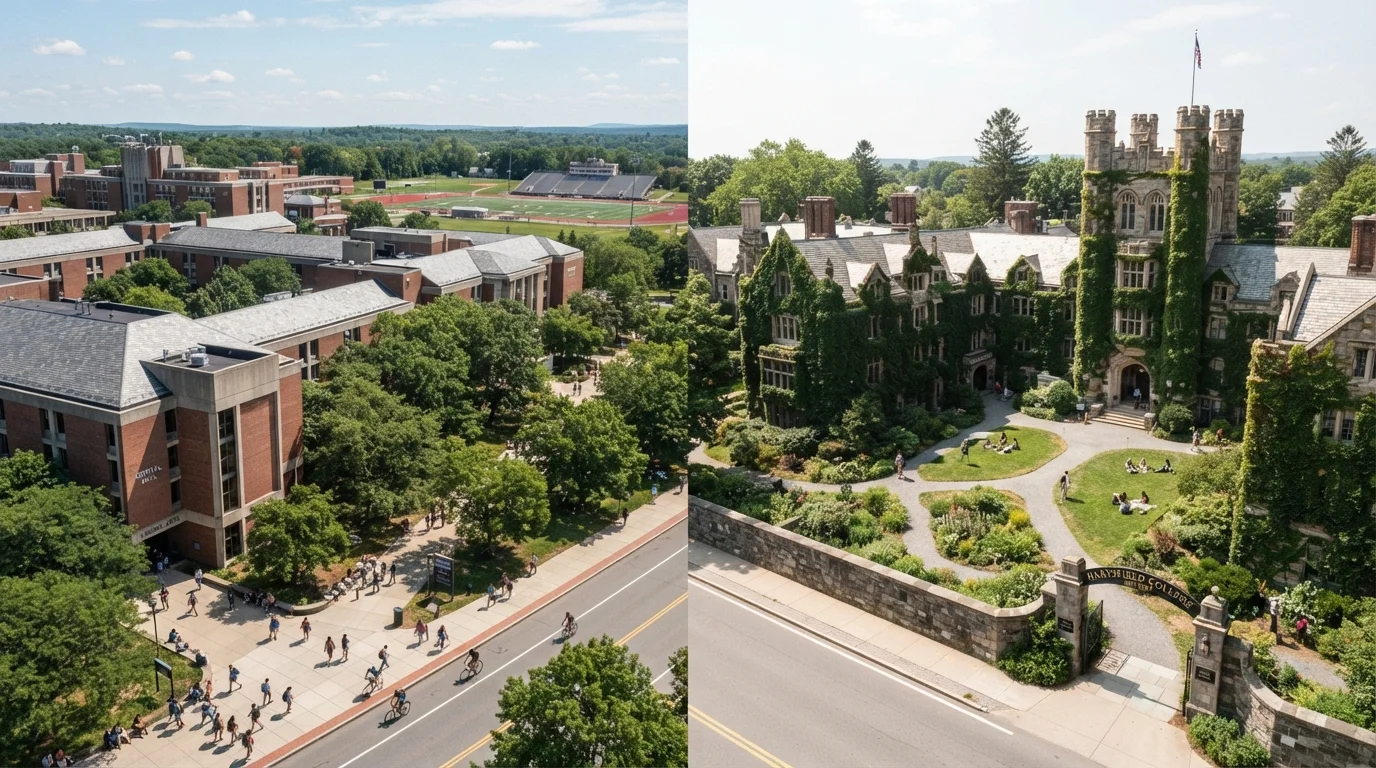
Photo credit: strategicimprovementplan.net
In this article
Tuition stickers rarely tell the full story. Compare net costs, aid availability, and outcomes between public and private four-year institutions.
Key Takeaways
- Sticker price and net price are different: private colleges often discount heavily through institutional grants.
- In-state public tuition is typically lower, but out-of-state public rates can exceed many private colleges.
- Private colleges generally have larger endowments per student, which can translate to more generous financial aid.
- Net price calculators at each school let families estimate actual costs before applying.
- Graduation rates and post-graduate earnings vary more by major and student engagement than by institution type.
Why sticker price misleads families
Most families first encounter a college's published tuition and assume that number reflects what they will pay. It rarely does. Both public and private four-year institutions discount their sticker prices through grants, scholarships, and institutional aid. The figure that matters is the net price: total cost of attendance minus all grants and scholarships that do not need to be repaid.
The National Center for Education Statistics publishes net price data annually, and the pattern is consistent: many private colleges charge far less than their published rates once institutional grants are applied. A private college with a $58,000 sticker price may have an average net price below $25,000 for students with financial need. A public in-state rate of $28,000 may drop to $14,000 after federal and state grants. The two numbers can end up closer than the sticker gap suggests. Families who skip this step often overpay. Common planning gaps that drive unnecessary college spending covers several of the errors that lead to this outcome.
| Criterion | Public University | Private College |
|---|---|---|
| Average in-state sticker tuition | ~$11,000/year (in-state) | ~$40,000+/year |
| Out-of-state sticker tuition | ~$29,000/year | Same rate for all students |
| Average institutional grant aid | Lower per student | Often higher per student |
| Net price after aid (moderate income) | Varies widely by state | Can fall below public rates |
| Federal aid eligibility | Yes, FAFSA-based | Yes, FAFSA-based |
| Class size | Often larger, especially early years | Generally smaller |
| Program variety | Broad, often 200+ majors | Narrower, more focused |
How financial aid works differently at each type
Public universities depend on state appropriations to subsidize in-state students. That subsidy disappears for out-of-state students, which is why out-of-state public tuition averages are often within a few thousand dollars of private college rates. Institutional grants at public schools tend to be smaller per student because the revenue base is different.
Private colleges are tuition-dependent, meaning they rely on what students pay rather than state funding. To fill their classes with the academic profiles they want, many private colleges discount tuition aggressively through institutional grants. A college with a large endowment per enrolled student can afford to meet a higher percentage of demonstrated financial need. This is why the net price for a low- or middle-income family at a selective private college sometimes falls below the net price at a public flagship.
Federal aid, including Pell Grants and subsidized loans, is available at both institution types and depends on the student's Free Application for Federal Student Aid (FAFSA) results. The FAFSA is the starting point for any aid calculation. Saving for college without disrupting other financial goals walks through how savings vehicles interact with aid eligibility.
$11,610
Average in-state public tuition and fees (2023-24)
According to the College Board's Trends in College Pricing report for 2023-24.
$41,540
Average private nonprofit tuition and fees (2023-24)
Also from the College Board's Trends in College Pricing report for 2023-24.
~$20,000
Median net price at many private nonprofits after aid
Net price data published by institutions via the National Center for Education Statistics show wide variation by income band.
Costs beyond tuition that affect the real total
Room and board, fees, books, and transportation add substantially to the total cost of attendance at both institution types. Public universities with large residential campuses can have room and board costs comparable to private colleges. Commuter students at either type can reduce this expense significantly. Books and course materials run $1,000 or more per year at many schools regardless of institution type.
Fees deserve particular attention. Activity fees, technology fees, and health service fees are common at large public universities and are not always included in the tuition figure families see first. This pattern appears across consumer categories; hidden costs that inflate budgets describes a similar dynamic in travel spending. Families should request a full cost-of-attendance breakdown, which colleges are required to publish, before making comparisons.
Using net price calculators before you apply
Federal law requires every college that participates in federal financial aid programs to publish a net price calculator on its website. These tools take income, assets, and household size as inputs and produce an estimated net price for that specific institution. The estimate is not a guarantee, but it gives families a realistic range well before applications are submitted.
Running the calculator at several public and private schools often produces surprises. A private college a family assumed was out of reach may show a net price lower than the in-state public option, depending on the family's financial profile and the private school's aid generosity. Community college as a lower-cost starting point is worth considering alongside these calculations for families who want to reduce total four-year borrowing further.
This article provides general educational information about college costs and financial aid. It is not personalized financial or legal advice. Families should consult a qualified financial aid counselor or adviser for guidance specific to their situation.

Author
Education Editorial Team
Education Editorial Team is the collective byline for our editorial team and contributor network. Articles published under this byline or an editorial pen name are researched, written, and reviewed according to our editorial standards for clarity, consistency, and independence before publication.
View all articles →