
Car Maintenance Myths That Could Be Costing You Money
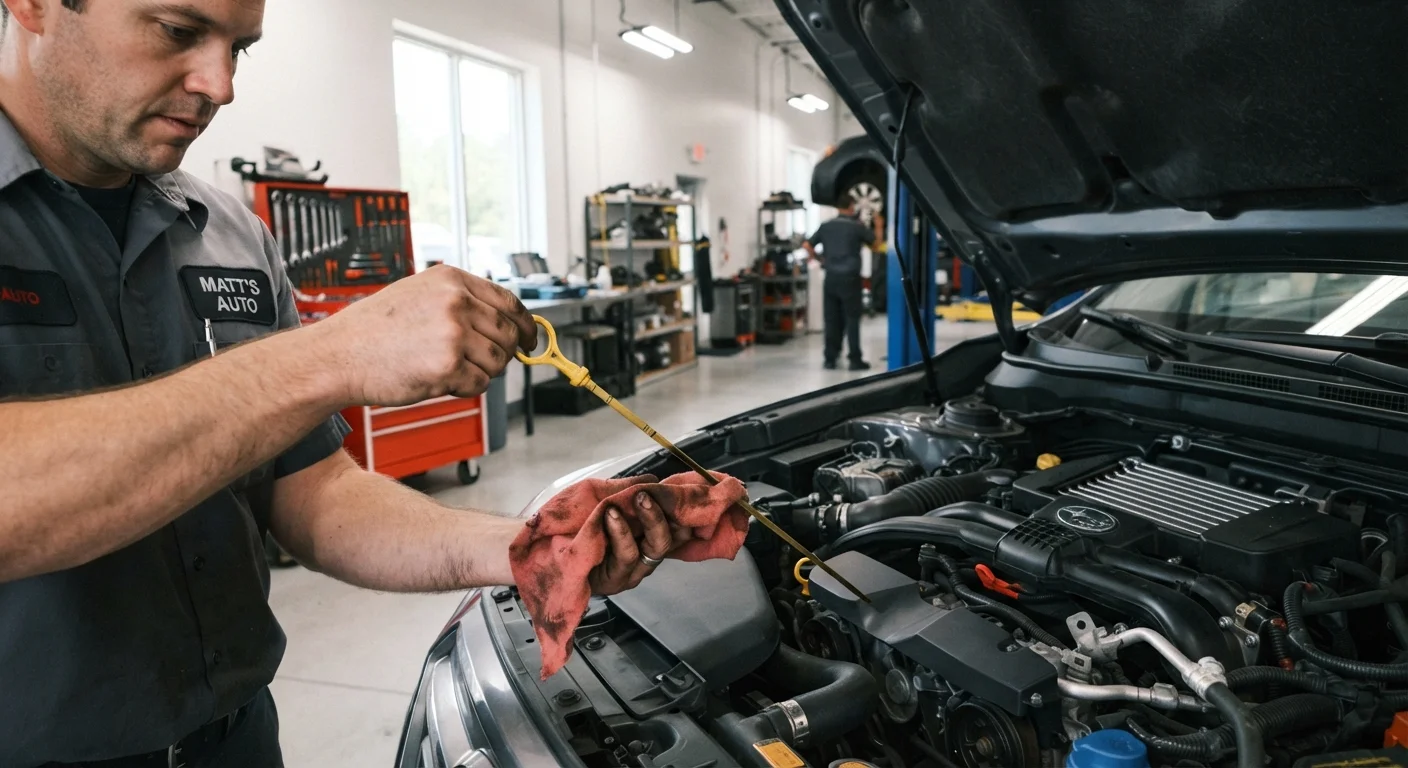
Photo credit: strategicimprovementplan.net
In this article
From oil change intervals to premium fuel, widespread car care myths lead families to spend unnecessarily. Here is what the evidence actually shows.
Key Takeaways
- Most modern vehicles no longer need oil changes every 3,000 miles, according to manufacturer guidelines.
- Premium fuel offers no benefit to engines designed and rated for regular unleaded gasoline.
- Warming up an engine by idling is unnecessary with modern fuel-injected vehicles and wastes fuel.
- Tire pressure should be set to the vehicle manufacturer's specification, not the number on the tire sidewall.
- Dealer service is not required to keep a new car warranty valid under federal law.
Why car maintenance myths persist
Many car care rules of thumb were accurate decades ago. Older engines, carbureted fuel systems, and lower-quality motor oils made frequent servicing genuinely necessary. When those technologies changed, the advice did not always follow. The result is a set of widely repeated habits that cost American families money without delivering any mechanical benefit.
Separating outdated habit from current best practice starts with one source: your vehicle's owner manual. Manufacturers publish maintenance schedules based on engineering data specific to each model. That schedule, not a service reminder sticker or a well-meaning neighbor, is the right guide for your car. For a broader look at how these costs add up over time, see what car ownership actually costs.
Common myths debunked
The myths below cover the areas where misinformation most often translates directly into unnecessary spending or, in some cases, maintenance tasks that get skipped because of a different false assumption.
Myth
You need to change your oil every 3,000 miles.
Fact
Most modern vehicles using full-synthetic oil can go 7,500 to 10,000 miles or more between oil changes, per manufacturer schedules.
The 3,000-mile rule came from an era of conventional oil and older engine tolerances. Modern full-synthetic motor oils are formulated to last significantly longer, and most current manufacturer maintenance schedules reflect that. Following the 3,000-mile habit on a vehicle rated for 7,500 miles or more means paying for roughly twice as many oil changes as your engine actually needs. Check the interval specified in your owner manual and the oil life monitoring system if your vehicle has one.
Myth
Premium gasoline gives any car better performance and fuel economy.
Fact
Premium fuel benefits only engines specifically engineered to require or recommend it. Using it in a standard engine produces no measurable gain.
Premium fuel has a higher octane rating, which matters for high-compression or turbocharged engines that knock on lower-octane fuel. If your vehicle's fuel door or manual says 'regular unleaded recommended,' spending the extra 20 to 50 cents per gallon on premium accomplishes nothing. The engine management system in a standard vehicle cannot take advantage of the higher octane. Check the fuel door label: 'required' means premium is necessary; 'recommended' often indicates regular is acceptable with a minor, often imperceptible, trade-off. Fuel efficiency habits that actually work covers where your fuel dollars have genuine impact.
Myth
You should warm up your engine by letting it idle for several minutes before driving.
Fact
Modern fuel-injected engines reach operating temperature faster by being driven gently, not by sitting idle.
Prolonged idling in cold weather made sense for carbureted engines, which needed time to stabilize fuel delivery. Fuel injection systems, standard on virtually every vehicle sold in the U.S. since the late 1980s, do not have that limitation. A minute or less of light idling before pulling away is sufficient in very cold conditions. Extended idling wastes fuel, increases wear on cylinder walls because the engine is not fully pressurized, and in some states can result in a fine for excessive idling.
Myth
The tire pressure number on the sidewall is the correct inflation target.
Fact
The sidewall number is the maximum pressure the tire can hold, not the recommended operating pressure for your vehicle.
Inflating to the sidewall maximum overinflates tires relative to the vehicle's design, which reduces the contact patch with the road and can make braking distances longer. The correct specification is on a sticker inside the driver's door jamb or in the owner manual. That figure accounts for the vehicle's weight distribution and suspension geometry. Running tires at the wrong pressure also accelerates uneven tread wear, meaning earlier replacement costs.
Myth
You must use the dealership for all service to keep your new car warranty valid.
Fact
Federal law (the Magnuson-Moss Warranty Act) generally prohibits voiding a warranty simply because maintenance was performed at an independent shop.
A dealer can require that warranty repairs be done at an authorized facility, but routine oil changes, tire rotations, and filter replacements performed by any qualified shop, or by the owner using parts that meet the manufacturer's specifications, do not automatically void the warranty. Keeping receipts and records is important. If a dealer claims your warranty is void due to independent maintenance, ask for that claim in writing and consider contacting the manufacturer's customer service or the Federal Trade Commission for guidance.
Using your owner manual as a money-saving tool
The owner manual lists every scheduled service interval, the correct oil viscosity, the recommended fuel grade, and the tire inflation specification. Families who follow those figures spend on maintenance only when it is actually needed. Those who follow myths spend more, sometimes on services their vehicle does not require and sometimes on damage caused by misplaced confidence in a shortcut.
If a shop recommends a service not listed in your manual, ask for a written explanation of why your specific vehicle needs it. That question alone filters out a significant share of unnecessary upsells. The article overpaying at the mechanic covers that dynamic in detail. And if you want to understand which tasks are genuinely safe to handle yourself, when DIY car repairs make sense is a practical starting point.

Author
Automotive Editorial Team
Automotive Editorial Team is the collective byline for our editorial team and contributor network. Articles published under this byline or an editorial pen name are researched, written, and reviewed according to our editorial standards for clarity, consistency, and independence before publication.
View all articles →