
Raised Beds vs. In-Ground Planting: What Actually Works for a Budget Garden
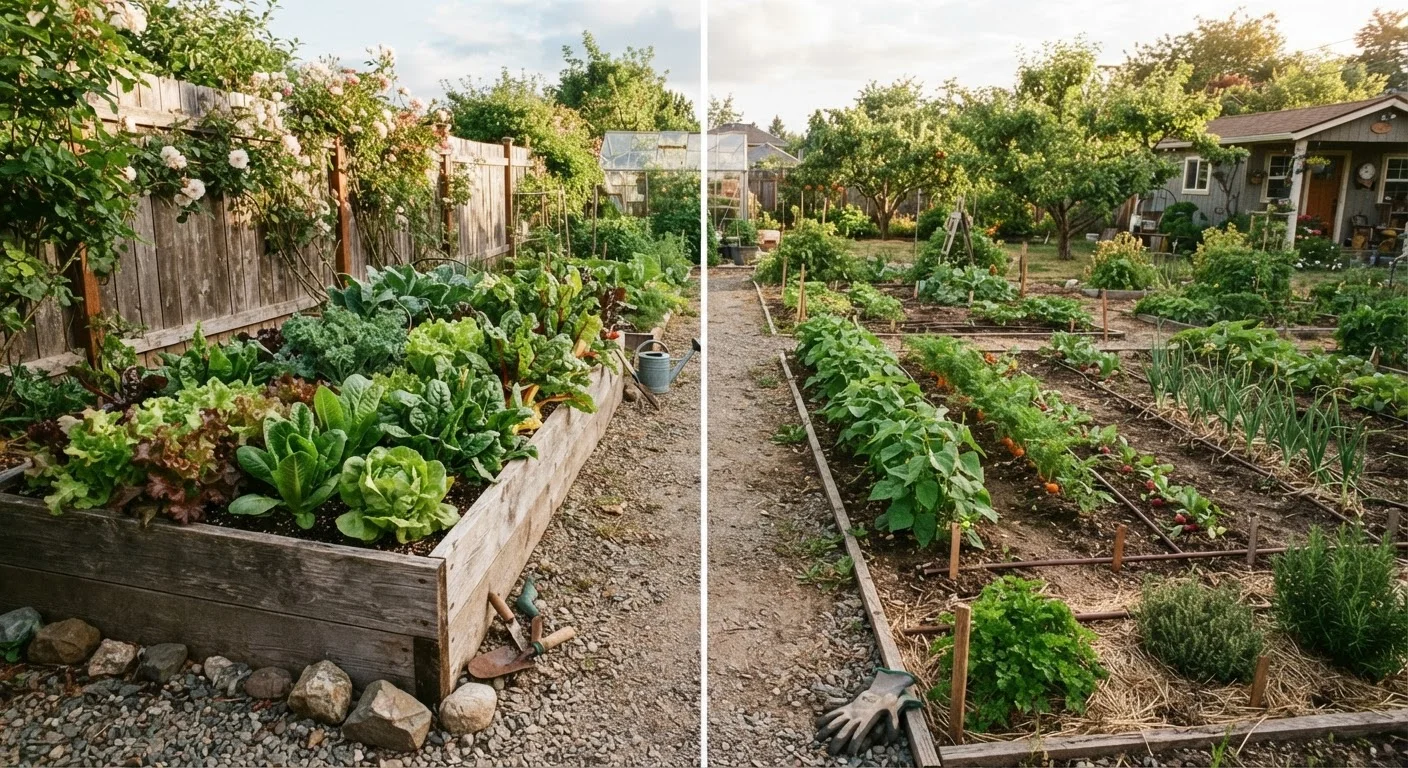
Photo credit: strategicimprovementplan.net
In this article
Raised beds look appealing, but in-ground planting has real advantages too. Compare costs, effort, and yields to find the right fit for your yard.
Key Takeaways
- Raised beds cost more to set up but give you full control over soil quality from the start.
- In-ground planting has very low startup costs but may require soil amendment work over time.
- Raised beds drain well and warm up faster in spring, which can extend your growing season.
- In-ground plots scale easily and suit crops with deep root systems like corn or winter squash.
- Composting improves both systems and is one of the most cost-effective soil investments you can make.
- Your native soil quality and physical comfort level should guide the final decision.
The real cost difference between the two approaches
Raised beds carry a clear upfront price. A basic 4-by-8-foot cedar frame, a cubic yard of quality fill mix (typically a blend of topsoil, compost, and coarse material), and hardware can run anywhere from $150 to over $400 depending on material choices and local soil costs. That number multiplies with every additional bed you add.
In-ground planting requires almost none of that. If your soil is workable, you need a spade, a few bags of compost, and seeds. Many gardeners start for under $30. The trade-off is that poor soil demands ongoing amendment work, and heavy clay or compacted ground can take two or three seasons to improve meaningfully.
Over a five-year horizon, the cost gap often narrows. A well-built cedar bed can last a decade. In-ground plots may need repeated compost and mulch inputs that add up quietly. Neither approach is automatically cheaper in the long run; the math depends on your starting soil conditions.
| Criterion | Raised beds | In-ground planting |
|---|---|---|
| Startup cost | $150 to $400+ per bed | Under $30 with good soil |
| Soil control | Full control from day one | Depends on native soil quality |
| Drainage | Excellent; elevated structure | Varies by soil type and slope |
| Season length | Longer; soil warms faster | Standard for your climate zone |
| Weed pressure | Lower with good setup | Higher, especially year one |
| Physical effort | Less bending; waist-height work | More ground-level activity |
| Scalability | Costly to expand | Low cost to add more rows |
| Deep-rooted crops | Limited by bed depth | Unrestricted root growth |
Soil control, drainage, and growing conditions
Raised beds give you a clean slate. You fill them with whatever mix suits your crops, which matters most when native soil is sandy, waterlogged, or dense with clay. Drainage is generally excellent, and the soil warms faster in early spring because it is elevated and exposed on multiple sides. That can add two to four weeks to your growing season in cooler climates.
In-ground soil is what it is, at least at the start. But it has real advantages: a deep, connected root zone, natural microbial communities already established, and the ability to stay moist longer in dry summers because it connects to the broader water table. Crops with long or wide root systems, including winter squash, sweet corn, and potatoes, often perform better in-ground because they have room to spread without hitting a container wall.
Composting is the single most cost-effective way to improve either system. Added to a raised bed mix, it boosts fertility. Worked into in-ground soil each season, it loosens clay and feeds soil organisms that support healthy plant growth.
Maintenance, weeds, and physical effort
Raised beds reduce but do not eliminate weeding. Weed seeds still blow in from above, and if the bed sits over existing soil, roots can push up through the bottom. A cardboard or landscape fabric layer under the fill mix helps block persistent perennial weeds in the first few seasons.
In-ground gardens typically deal with more weeds, particularly in the first year when dormant seeds in the tilled soil germinate. Mulching heavily with straw or wood chips addresses most of this without chemicals.
Physical effort is where raised beds often win for families with older adults or anyone managing joint pain. Working at waist height changes the experience of gardening considerably. That said, a simple kneeling pad and good tools go a long way toward making in-ground work comfortable.
For overall yard maintenance, keeping surrounding lawn healthy on a budget means less competition from grass creeping into garden edges, which applies to both bed types.
6-12 inches
Minimum raised bed depth for most vegetables
Most cooperative extension programs recommend at least 6 inches of fill for root crops and 12 inches for tomatoes and peppers.
$30 or less
Estimated first-season cost for basic in-ground plot
A small in-ground vegetable plot started with seeds, compost, and hand tools can cost under $30 when native soil is workable.
2 to 4 weeks
Earlier planting potential with raised beds
Raised bed soil typically warms faster in spring than in-ground soil, which can allow earlier planting in USDA hardiness zones 5 through 7.
Which setup fits your yard and goals
Raised beds work well in constrained spaces, on slopes (where leveling a bed is easier than terracing ground), and in yards where a defined, tidy appearance matters. They also allow precise soil management for specific crops, which appeals to gardeners who want to grow things their native soil would not support without years of work.
In-ground planting suits larger growing ambitions. If you want 200 square feet of vegetables, building enough raised beds to cover that area is expensive. Digging and amending that same area in-ground is mostly labor. For families focused on producing as much food as possible per dollar spent, in-ground usually wins on efficiency once soil is in reasonable shape.
A hybrid approach is practical for many households: one or two raised beds for herbs, salad greens, and crops that need excellent drainage, combined with in-ground rows for beans, tomatoes, and squash that tolerate a wider range of soil conditions. This spreads startup costs and lets you learn which method works for your specific yard before committing fully to either.

Author
Home & Garden Editorial Team
Home & Garden Editorial Team is the collective byline for our editorial team and contributor network. Articles published under this byline or an editorial pen name are researched, written, and reviewed according to our editorial standards for clarity, consistency, and independence before publication.
View all articles →