
Reading a Medical Bill Without the Confusion
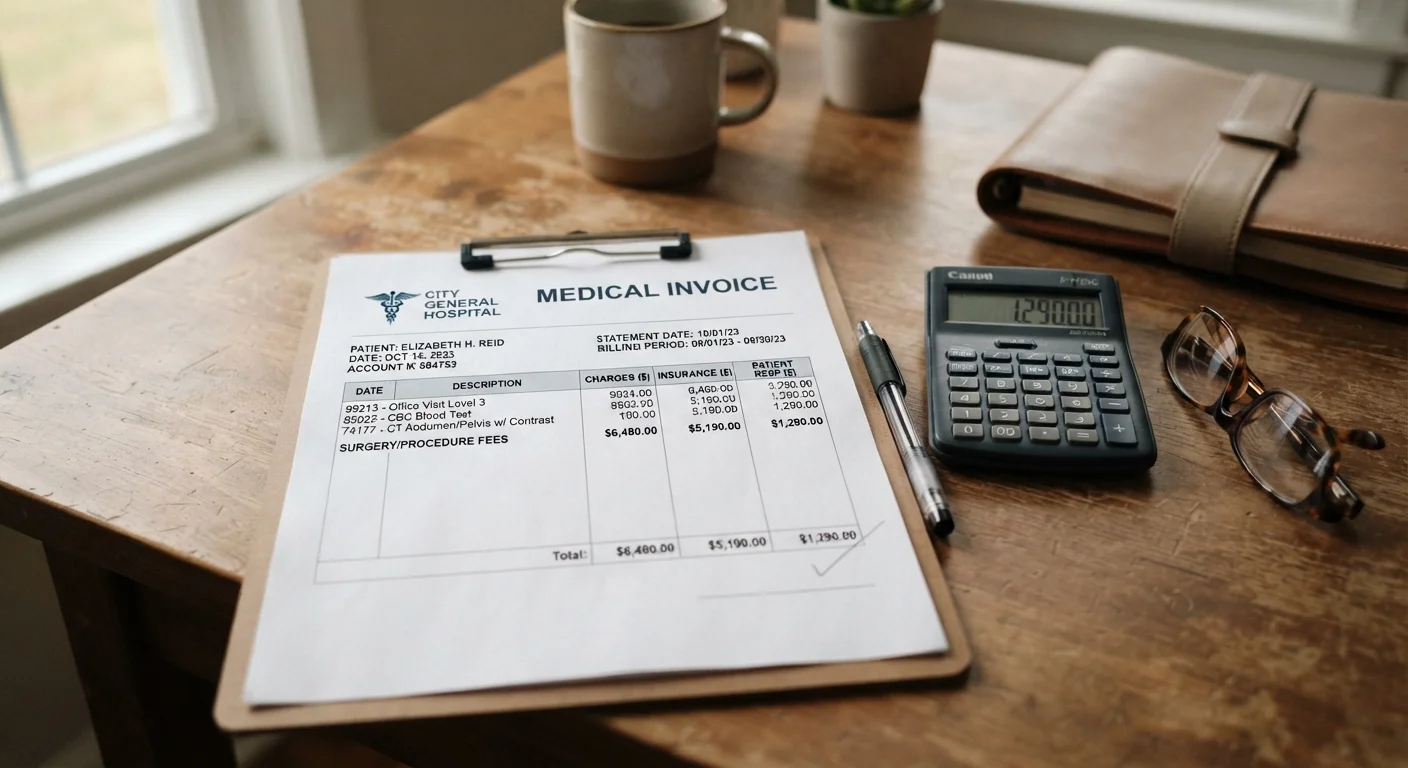
Photo credit: strategicimprovementplan.net
In this article
Medical bills are notoriously hard to parse. This step-by-step walkthrough explains common line items, codes, and what to do if something looks wrong.
Key Takeaways
- Medical bills frequently contain errors, so reviewing every line item before paying is worth the time.
- Explanation of Benefits documents from your insurer are the essential companion to any hospital or provider bill.
- Procedure codes (CPT) and diagnosis codes (ICD-10) are the shorthand on every bill and can be looked up for free.
- You can request an itemized bill from any provider, and they are required to give you one.
- Billing departments can correct errors, set up payment plans, or connect you with financial assistance programs.
Why medical bills are hard to read
Medical billing uses a language built for insurance systems, not patients. A single office visit can produce multiple bills from different entities: the hospital or clinic, the physician group, the radiologist, the anesthesiologist. Each sender formats their bill differently, and none of them are required to explain what each line means.
Errors are common. A study published in the Journal of the American Medical Association found that billing mistakes occur across a broad range of claims. Duplicate charges, services billed but not received, and upcoding (charging for a more complex service than was provided) are among the problems that go unnoticed when patients pay without reviewing.
Understanding your bill is also directly connected to your household budget. If you are tracking where your family's money goes, medical costs are one of the categories most likely to surprise you. See our plain-language family budget breakdown for context on how healthcare fits into overall spending.
This article is general health and financial information, not medical or legal advice. For concerns about specific charges or coverage disputes, contact your insurer or a patient advocate.
What you need before you start
Gather these items before working through any bill. Having them together in one place saves significant back-and-forth.
What you will need
If you have coverage through an employer or marketplace plan, the Explanation of Benefits (EOB) is the most important document. It shows what your insurer agreed to pay, what adjustments were applied, and what portion is your responsibility. The EOB is not a bill, but it should match the amounts on the bill you receive from the provider.
How to read a medical bill step by step
Work through the bill in the order below. Each step builds on the previous one, so resist the urge to skip ahead to the total.
Confirm the basic patient and visit information
Check that your name, date of birth, insurance ID, and the date of service on the bill match your records. An incorrect member ID or wrong date can cause an insurer to deny a claim, leaving you with a balance that should have been covered.
Request and review an itemized bill
If your bill shows only a lump-sum total or broad categories, call the billing department and ask for a fully itemized statement. You are entitled to one. The itemized bill lists every charge individually, including room fees, medications, supplies, and each procedure.
Compare this list against your own memory of the visit. Look for items you did not receive, duplicate entries for the same service on the same date, or charges for services marked as routine that your plan covers at no cost.
Decode the procedure and diagnosis codes
Most bills include CPT codes (Current Procedural Terminology), which are five-digit numbers identifying the specific service billed, such as an office visit at a particular complexity level or a specific lab test. They also include ICD-10 codes, which are alphanumeric codes representing the diagnosis. Both are publicly searchable.
Look up any code you do not recognize. If a CPT code describes a procedure you did not have, or if the complexity level listed is higher than what you recall, flag it for the billing department.
Match the bill to your Explanation of Benefits
Place the itemized bill side by side with the EOB for the same date of service. The EOB shows the billed amount, the insurer's contracted rate (the negotiated discount), what the insurer paid, and what you owe. The amount listed as your responsibility on the EOB is what you should actually owe the provider.
If the provider is billing you more than the patient responsibility shown on the EOB, that is a discrepancy worth disputing. Also check whether the provider is listed as in-network on the EOB, since out-of-network billing can dramatically change your share of the cost.
If you are new to how insurance cost-sharing works, the guide to navigating health insurance for the first time covers deductibles, copays, and coinsurance in plain terms.
Document discrepancies and contact the billing office
List each discrepancy clearly: the line item, the code, what the bill says, and what you believe it should say. Call the provider's billing department with this list. Most errors are corrected without a formal dispute if you catch them early and present them clearly.
If the billing office cannot resolve the issue, ask for the name of their patient advocate or billing compliance officer. Escalating internally is often faster than going through your insurer first.
Keep copies of everything
Save every version of the bill you receive, along with corresponding EOBs, as PDFs or physical copies. If a dispute takes several weeks, having a paper trail of original charges and communications prevents confusion about what was agreed. Most billing disputes are resolved within 30 to 60 days when documentation is clear.
What to do if something looks wrong
Contact the provider's billing department first. Ask them to explain any line item you do not recognize and request a corrected bill in writing if an error is confirmed. Keep a written log of every call: date, name of the representative, and what was said.
If the dispute involves what your insurer paid, call the number on the back of your insurance card and reference the EOB. Insurers have a formal appeals process, and you have the right to use it. Many states also have consumer assistance programs through their insurance commissioner's office that can help at no cost.
For large balances, ask the billing department directly about financial assistance or charity care programs. Many hospitals operate these programs regardless of insurance status but do not advertise them widely. A payment plan, if needed, is almost always available; interest-free options exist at many nonprofit hospitals.
Getting a second look at a confusing bill is similar to the principle of seeking a second opinion before an expensive auto repair. Our article on patterns that drain family budgets at the mechanic covers the same basic logic applied to a different context.

Author
Health Editorial Team
Health Editorial Team is the collective byline for our editorial team and contributor network. Articles published under this byline or an editorial pen name are researched, written, and reviewed according to our editorial standards for clarity, consistency, and independence before publication.
View all articles →